The instructor told me, kindly, at normal volume, in front of eight other people, that I was breathing “a bit like a startled goose.” I am a grown adult with a mortgage, a pension and a laminated parking permit. I had not been publicly, obviously bad at anything in about fifteen years, and I had forgotten what it does to your face.
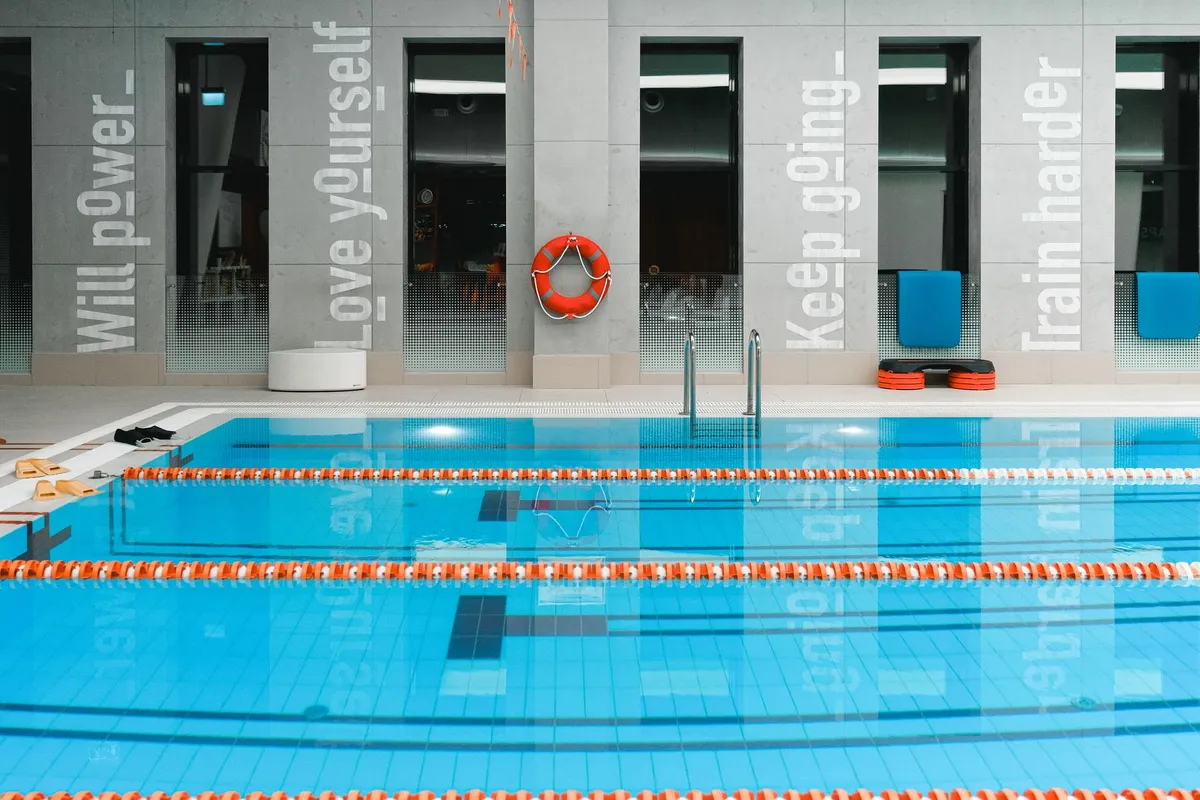
This was an adult swimming class. Not learn-to-swim, exactly. I could swim in the way you can swim if you spent childhood summers thrashing across a lake: enthusiastically and with no discernible technique. I had signed up because I wanted to do lengths without feeling like I was drowning politely.
In the fast lane there were two teenagers who moved through the water like they’d been designed for it. In my lane there was me, a man called Ravi who kept apologizing to the pool, and a woman who had clearly been an excellent swimmer in 1994 and was visibly negotiating with that fact.
The first ten minutes were fine. Then we were asked to do something with our arms while also doing something with our heads, and I did neither, and I understood with complete clarity that I could feel my own ears.
What I was actually protecting
On the drive home I told myself I didn’t have time for this. Four classes in and already the excuses were lining up: work, the commute, Thursday being Thursday. It’s a very good lie because it’s partly true. Time is genuinely tight.
But I’ve had that thought enough times to recognize the shape of it. It wasn’t time. It was that for one hour I had been the worst person in a small room, and I had spent two decades quietly arranging my life so that would never happen.
Think about how adulthood narrows. You try things in your teens and twenties because you have to, because everything is new and nobody expects you to be good. Then you find the two or three things you’re decent at, and the world rewards you for doing more of those, and you get better, and the rewards get bigger. By your late thirties you have a whole identity built out of competence. People ask your opinion. People assume you know. You’ve become the person who’s good at things, and that reputation is load-bearing.
Being a beginner puts a crack in it. Not a real one, nobody at the pool knew or cared what I do for a living, but it feels real, because visible incompetence is a social risk and we are all extremely well trained to avoid social risk.
That’s the whole problem. Not laziness. Not busyness. Dignity.
Which is a ridiculous thing to be protecting at 38, when you think about it. My dignity has survived worse. My dignity has survived a work call where I talked for ninety seconds on mute. But somehow the idea of being the slow one in lane three felt like a threat to the entire project of me.
I notice this most in the way people describe themselves. “I’m not a sporty person.” “I’m terrible with languages.” Half of those lines are just descriptions that expired years ago and we keep using them because they’re cheaper than finding out.
The eight sessions where I was allowed to be terrible
What got me back in the water was lowering the bar until it was lying on the ground.
I bought eight sessions. Not a goal, not a distance, not a stroke I’d master. Eight sessions of being bad on purpose. That was the entire commitment. If I turned up eight times and was exactly as bad at the end as at the start, I’d have done what I said I’d do.
This sounds like a trick and it is, but it worked, because it moved the thing I could fail at. I couldn’t fail at improving anymore. I could only fail at showing up, and showing up is a much easier test to pass on a Thursday when you’re tired.
Weeks one to three were unpleasant in a low, humming way. Not agony, just dread with a swim bag. Around week four something came off. I don’t know what changed except the room stopped being a room where I was being evaluated and became a room where I go on Thursdays. Ravi and I started talking about his sister’s dog. The 1994 woman got her backstroke back and we all pretended not to watch.
I got better too, eventually, but that turned out to be the least interesting part.
If you want to try this without hating it
Pick something with a small audience. A class of eight strangers who are also bad, ideally. Not the thing you’d have to be bad at in front of people whose opinion you actually care about, because that’s a harder version and you don’t need the hard version first.
Count attendance, not ability. Ability is a terrible metric early on because it moves in ways you can’t see, and you’ll use the flat weeks as proof you should stop. Attendance is a number that only goes up if you’re honest, which is exactly what you need when your brain is building a very reasonable case for quitting somewhere around session three.
And tell one person. Just one. My neighbor asked me every Friday how the swimming was going, which is a small social debt but a real one, and it made disappearing quietly much more awkward than just going.
Mostly, though, stop waiting to feel like someone who does this. That feeling shows up late, if it shows up at all, and waiting for it is how you end up 45 and still good at only the things you were good at at 25.
The goose comment still lives in me. So does the fact that I can now swim a kilometer without stopping, which nobody at that pool would have predicted, least of all the instructor.
Frequently asked questions
Is it really harder to learn new skills as an adult?
Learning takes longer when you have less free time and more self-consciousness, but the bigger obstacle is usually embarrassment rather than ability. Most adult beginners quit in the first month, before they've given themselves a chance to get past the awkward part.
How do I stop feeling stupid in a beginners' class?
You mostly don't, at first. What helps is choosing a class where everyone is equally bad, going often enough that the room becomes familiar, and giving yourself a fixed number of sessions where being terrible is the plan rather than a failure.
How long before a new skill stops feeling awful?
For a weekly class, somewhere around the fourth or fifth session is when the dread usually thins out, not because you've improved much but because the setting stops feeling like a test.
Should I tell people I've started something new?
Tell one person, not everyone. One friend who asks how it's going creates just enough accountability to make quietly quitting awkward, without the pressure of an audience waiting for results.